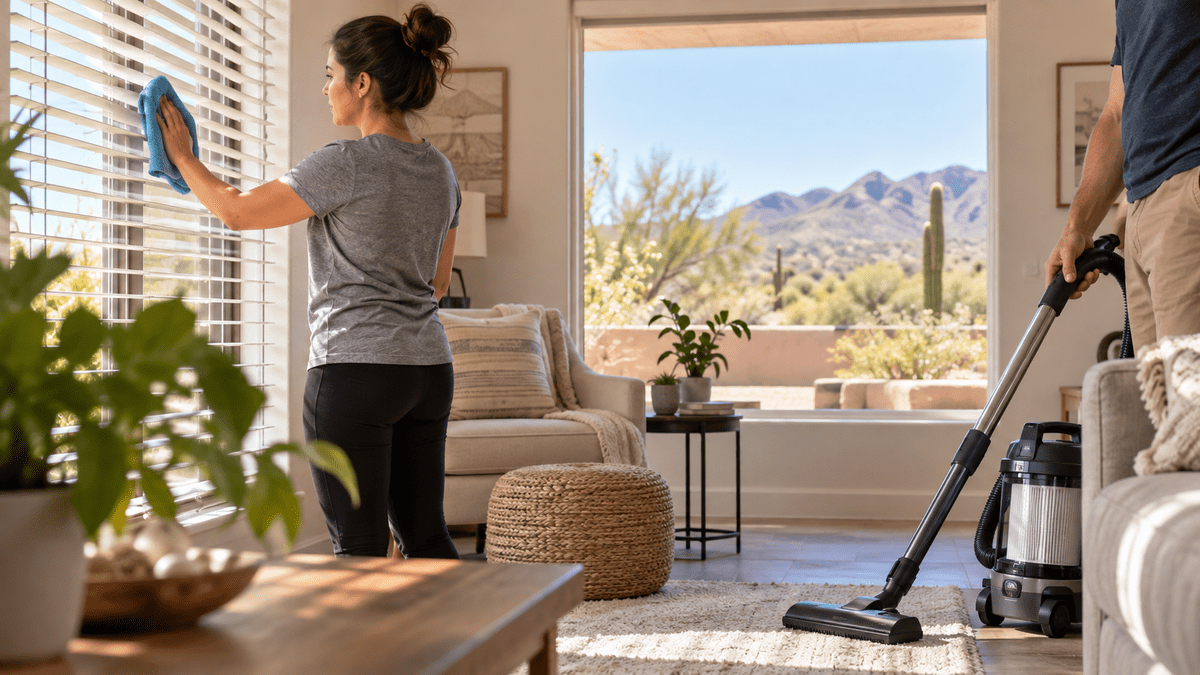
Dust can return quickly in Anthem homes especially when dry desert conditions, open doors, pets, foot traffic, and everyday routines bring fine particles indoors. Learning how to reduce dust buildup inside the home starts with controlling what enters the space and removing settled particles before they spread from one room to another.
How to reduce dust buildup inside the home? The most practical approach combines regular dusting, floor care, HVAC maintenance, and attention to entry points. Fresh filters, sealed doors and windows, washable mats, and consistent vacuuming can all help limit buildup.
For many households, the goal isn’t to eliminate dust completely. That’s rarely realistic. A better plan is to reduce how quickly it accumulates, keep commonly used rooms easier to maintain, and address the places where particles tend to settle unnoticed.
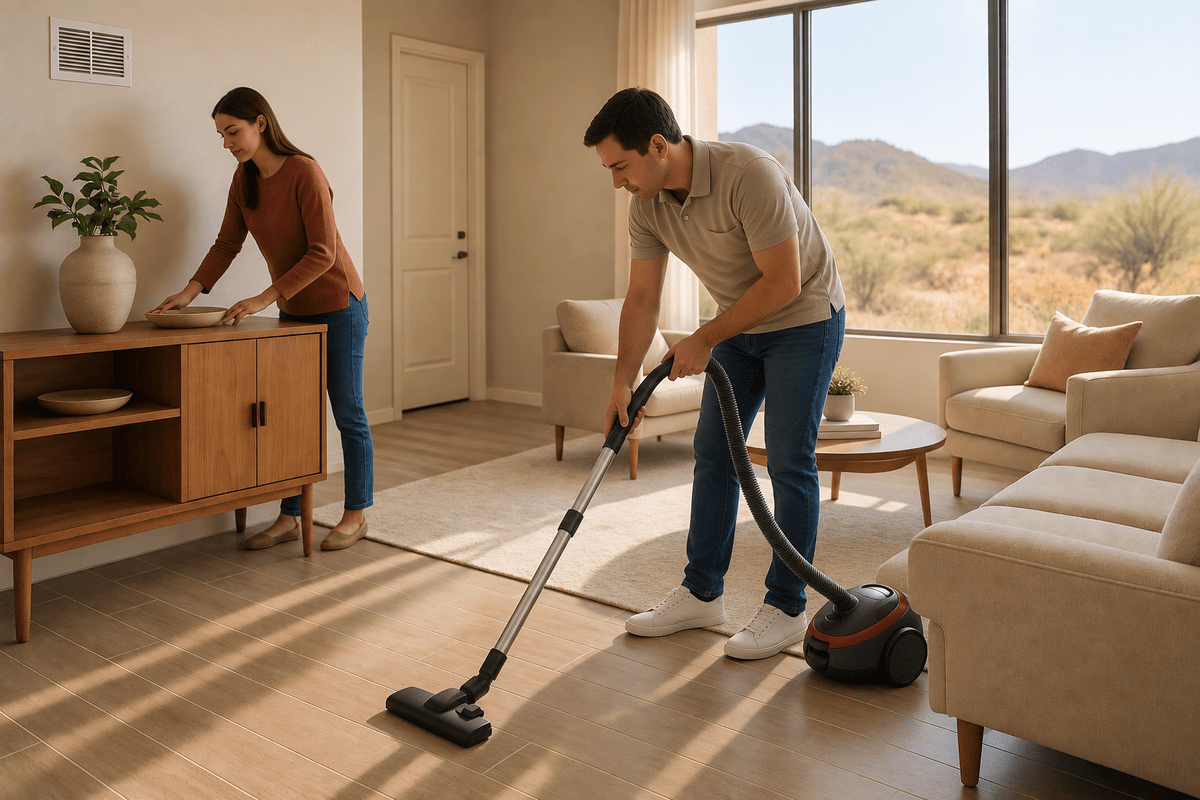
Preventing Dust before It Spreads through the Home
Household dust comes from several sources. In Anthem and other Arizona communities, outdoor soil and desert sand can enter through doors, windows, garages, patios, and shoes. Indoor sources can include fabric fibers, skin cells, pet hair, pollen, and debris generated by normal household activity.
Once those particles get inside, they tend to collect in predictable places:
- Window sills and baseboards
- Ceiling fans and blinds
- Electronics and shelving
- High-traffic areas near doors
- Under beds, sofas, and other furniture
- Around air returns and vents
The first step in preventing dust is therefore to limit how much enters the home. Use durable mats inside and outside exterior doors and clean them regularly. Removing shoes near the entrance can also reduce the amount of dirt tracked onto floors and carpets. After windy weather, check patios and entry areas before opening doors repeatedly, especially if visible dust has collected outside.
Weatherstripping also deserves attention. Gaps around exterior doors and windows can allow fine particles to drift inside even when openings are closed. Replace worn seals and consider door sweeps where there’s visible space beneath the threshold.
Pet owners may need a slightly different routine. Hair and dander tend to collect along walls, beneath furniture, and around air returns. Regular brushing, washing pet bedding, and vacuuming favorite resting areas can help keep these materials from circulating through the rest of the home.
The more dust you stop at the entrance, the less you have to remove later.
Change Air Filters and Keep Vents Clear
Your HVAC system continuously moves air through the house, which means filters and vents can play an important role in how airborne particles circulate.
Change air filters according to the schedule recommended for your specific system and household. Homes with pets, frequent window use, higher occupancy, or allergy concerns may need filter attention sooner than quieter homes. HEPA filters may capture very small particles but should only be used when they’re compatible with the HVAC equipment.
Avoid blocking return vents or supply vents with furniture, rugs, boxes, or other household items. Restricted airflow can affect how the system operates and may contribute to dust collecting around those areas.
Use the following table as a practical maintenance reference:
| Area | What to Do | When to Check |
|---|---|---|
| HVAC filter | Replace according to system and household needs | On the recommended schedule |
| Return vents | Keep clear of furniture, hair, and debris | During routine cleaning |
| Exterior doors | Check weatherstripping and door sweeps | When gaps or daylight are visible |
| Windows | Inspect seals and keep closed during dusty, windy conditions | As wear appears |
| Entry mats | Use washable mats inside and outside | Clean as needed |
| Airflow | Watch for weak circulation or unusually rapid dust buildup | Contact an HVAC technician if problems persist |
Filters are only one part of the strategy. Dust will still settle on surfaces, furniture, and floors, so HVAC care works best when paired with consistent household cleaning.
Follow a Floor-Cleaning Routine That Captures Household Dust
Floors hold a large amount of settled debris, particularly near entrances, kitchens, hallways, pet areas, and rooms connected to patios or garages.
A consistent floor-cleaning routine helps stop that material from being kicked back into the air and carried into other rooms.
You could use a vacuum cleaner on hard floors, rugs, and carpeted areas two or three times per week, with extra attention to high-traffic routes and pet zones.
Start with vacuuming rather than immediately reaching for a mop. Removing loose particles first can prevent them from turning into muddy residue on hard surfaces.
For best results:
- Vacuum carpets, rugs, and hard flooring first.
- Pay extra attention to entryways and edges.
- Use attachments beneath furniture and along baseboards.
- Follow with a damp microfiber mop on suitable hard floors.
- Wash reusable pads and cloths after use.
A vacuum with a sealed filter system can be helpful because it’s designed to capture fine dust instead of sending as much material back into the room.
Robot vacuums can also help with light maintenance between deeper cleaning sessions, especially in high-traffic rooms. They still need support in corners, along edges, under certain furniture, and in areas where larger debris accumulates.
When damp mopping, use only as much moisture as the flooring material allows. Standing water can affect grout, wood finishes, and some laminate surfaces.
Don’t forget upholstery. Sofa cushions, chair seams, fabric headboards, and upholstered furniture can collect lint, pet hair, and fine desert dust. Vacuuming these areas occasionally prevents debris from remaining hidden until the furniture is disturbed.
Use a Damp Microfiber Cloth on Dust-Prone Surfaces
Dusting technique matters. Dry feather dusters and similar tools can move particles from one surface to another instead of removing them.
A damp microfiber cloth can capture dust while reducing the amount sent back into the room. Work from higher areas downward, then cleaning floors afterward so falling particles are removed rather than left behind. Use that top-to-bottom order throughout the home.
Start with ceiling fans, upper shelves, tall furniture, blinds, and other elevated areas. Move next to tables, electronics, window sills, countertops, and lower shelving. Finish with baseboards and floors.
Areas that often deserve extra attention include:
- Ceiling fan blades
- Window tracks
- Blinds
- Baseboards
- Shelving
- Electronics
- Lamps
- Air vents
- Upholstery
- Spaces beneath beds and sofas
Cleaning tools should also be maintained. A dirty cloth or overloaded vacuum can simply redistribute what you’re trying to remove.
Wash microfiber cloths and mop pads after use. Empty vacuum bins as needed and clean or replace vacuum filters according to the manufacturer’s directions.
Consistency matters more than trying to clean every dust-prone surface in one session. Frequently used rooms may need weekly attention, while fans, blinds, under-furniture areas, and less-used spaces can be handled on a rotating schedule.
A manageable routine is easier to maintain than a long list that gets postponed.
Use an Air Purifier and Know When Carpets Need Added Attention and a Good Vacuum
An air purifier can help capture airborne particles between cleaning sessions, but it should support regular cleaning rather than replace it.
If you choose one, select a unit sized for the room where it will operate. Consider bedrooms, living rooms, or home offices where household members spend significant time and keep the intake clear of furniture or other obstructions.
HEPA filters are commonly used in air purifiers designed to capture very small particles. Follow the manufacturer’s instructions for filter replacement or cleaning and pay attention to the listed room coverage.
Carpets require direct care because dust, pollen, pet dander, and tracked-in soil can settle below the visible surface.
Vacuum high-traffic areas slowly enough for the machine to lift embedded debris. Use attachments around baseboards, beneath furniture, and near upholstered pieces.
Have carpets professionally cleaned every 12 to 18 months and sooner when they look dull, develop odors, show recurring spots, or leave a room feeling dusty shortly after vacuuming.
That recommendation may be especially useful for homes with pets, children, frequent visitors, open-window habits, or heavier foot traffic.
Air purifiers, HVAC filters, and carpet care all address different parts of the same problem. One targets airborne material, another supports whole-home circulation, and the third removes buildup from flooring.
Used together with regular dusting and vacuuming, they can make dust easier to control.
Keep Dust under Control with Help from AZ House Cleaner
Reducing dust takes a combination of prevention and routine cleaning. Keep doors and windows properly sealed, use entry mats, remove shoes when practical, maintain HVAC filters, vacuum regularly, and wipe surfaces from high to low.
Pay particular attention to the places dust tends to collect unnoticed, including blinds, fans, baseboards, upholstery, vents, and spaces beneath furniture. In Anthem’s dry climate, staying ahead of buildup is usually easier than waiting until every surface needs attention at once.
For homeowners with limited time, recurring professional cleaning can take the larger dusting and floor-care tasks off the weekly schedule. AZ House Cleaner offers detailed cleaning in areas where dust repeatedly settles, including surfaces, floors, vents, furniture, and other overlooked spaces.
A regular cleaning rhythm can also make everyday upkeep feel less demanding. When floors, baseboards, furniture, and high-use rooms receive consistent attention, dust has less time to collect into visible layers. That can be especially helpful in homes with pets, children, frequent guests, or rooms that open directly to patios, garages, or outdoor areas.
Professional service can also help you stay on top of jobs that are easy to postpone, such as wiping blinds, vacuuming beneath furniture, cleaning ceiling fans, and addressing dust along edges and corners.
If your home tends to collect dust quickly after windy weather or busy weeks, scheduling support before buildup becomes frustrating can make the space easier to maintain between visits. You can then focus your own time on light daily upkeep instead of repeatedly catching up on larger cleaning tasks.
Whether you need a one-time reset or recurring help, AZ House Cleaner can handle the routine cleaning that keeps an Anthem home feeling orderly and comfortable. Schedule service when dust, pet hair, floors, and hard-to-reach surfaces are taking more time than you want to spend maintaining them.



Arizona Cleaning
We will send you info about our cleaning company