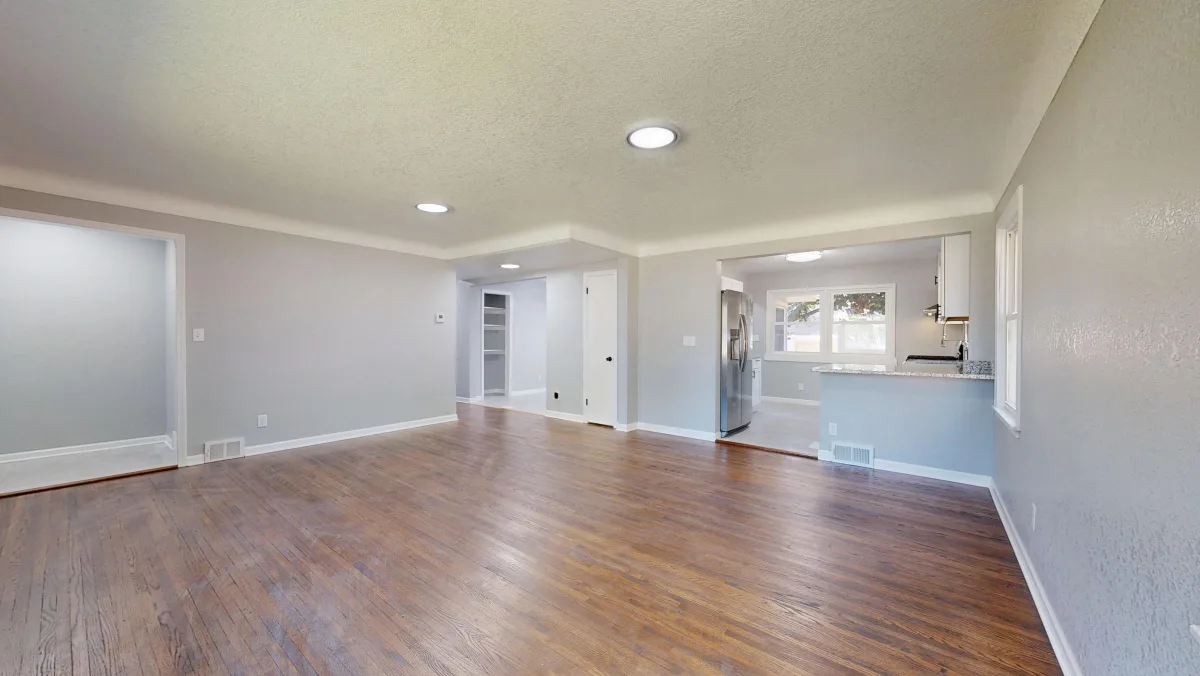
An empty house may look simple to clean, but vacant rooms often expose dirt and buildup that furniture, rugs, boxes, and everyday belongings once hid.
Dust gathers along baseboards and vents, crumbs remain inside cabinets, and kitchens or bathrooms may need extra attention before a move, sale, rental turnover, or new occupant arrives.
If you are wondering how to prepare an empty home for cleaning, start by clearing out personal items, trash, and leftover moving materials so every surface is easy to reach.
Check that water, electricity, and lighting are working, and make sure repairs or construction work are finished before the cleaning appointment begins.
It is also worth walking through the property before anyone starts scrubbing.
Look for leaks, pest activity, broken glass, loose fixtures, strong odors, moisture, or other concerns that may need separate attention.
Photograph existing damage so you have a clear record of the home’s condition before cleaning starts.
Once the property is empty, accessible, and safe, you can focus on the areas that usually need the most attention, including kitchens, bathrooms, closets, appliances, floors, and storage spaces.
If you would rather leave the detailed work to a professional, AZ House Cleaner can help prepare an empty home for a move, sale, rental turnover, or new occupant.
You can book a move-out clean online, or call or text (928) 928-6243.
Preparing the space in advance helps reduce delays, prevents repeat work, and makes the cleaning process more efficient from start to finish.
Clear the Property Before the Cleaning Service Arrives
A cleaning crew can work much faster when rooms, counters, cabinets, and storage areas are empty.
Even a few leftover items can slow the process because someone must decide whether they should be moved, discarded, or left alone.
Start with decluttering anything that remains in the house.
Remove old mail, packing materials, food, toiletries, cleaning products, paint cans, forgotten hardware, clothing, and personal belongings.
Check areas that are easy to overlook during a move, including garage shelves, laundry rooms, pantries, attic storage, bathroom cabinets, and all closets.
If you’re preparing the property after moving out, separate what remains into trash, recycling, donations, and items that still need to be transported.
Do this before the cleaning service arrives rather than asking cleaners to sort personal property.
Pay particular attention to the kitchen.
Empty the sink, remove food from the refrigerator and freezer, and clear cabinets and drawers if their interiors are part of the cleaning.
An empty appliance is easier to wipe thoroughly, and an empty cabinet allows cleaners to reach corners, shelves, tracks, and sticky residue without working around dishes or food.
Use the following preparation checklist before cleaning begins:
- Remove all personal belongings, trash, recycling, and packing materials.
- Empty countertops, sinks, shelves, cabinets, drawers, and closets where interior cleaning is requested.
- Clear garage corners, utility rooms, patios, and other storage spaces included in the job.
- Remove food from the refrigerator, freezer, pantry, and other kitchen storage.
- Take down temporary hooks, tape, labels, or moving materials when they can be removed safely.
- Confirm which appliances, cabinets, windows, or other areas are included in the cleaning service.
- Photograph existing damage before cleaners begin.
Clearing the property first gives cleaners access to the surfaces that often need the most attention in an empty home.
Check Utilities, Access, and Safety Before Cleaning Starts
Before house cleaning begins, walk through the property while there is still time to correct practical problems.
Water and electricity should be working.
Cleaners may need water for sinks, bathrooms, floors, and other washing tasks.
Electricity is usually needed for vacuums, lighting, and equipment.
Good lighting also makes dust, stains, grease, and damage easier to see.
If the home has been sitting empty, run water briefly at sinks, showers, tubs, and other fixtures.
Check beneath sinks and around toilets, water heaters, and windows for leaks or moisture.
A slow leak is easier to address before cleaning than after cabinets and floors have already been wiped.
Look for pest activity, broken glass, exposed hardware, loose outlets, damaged flooring, or other hazards.
Cleaning should not begin in an area that is unsafe to enter or work around.
For pests, book pest control first and schedule your cleaning 2 or more days later.
Your cleaner then cleans up dead bugs as a special request, without working around fresh chemicals or an active pest problem.
We are happy to refer a local pest control company.
Access matters as well.
Make sure the cleaning company knows how to enter the property and where to park.
Provide door codes, gate instructions, keys, garage remotes, or building access information as needed.
If certain rooms should remain off-limits, identify them before work begins.
For vacant properties, air conditioning can also matter.
Arizona homes can heat up quickly, and a comfortable indoor temperature helps a cleaning crew work safely and efficiently.
Keep the power on with the AC or fans working, and let your cleaner adjust the thermostat.
If the power or AC will be off, tell us ahead of time so we plan accordingly.
If the home has been closed for a while, airing it out when weather permits may also help identify lingering odors or stale areas that deserve attention.
Before the appointment, confirm these basics:
| Preparation Area | What to Check | Why It Helps |
|---|---|---|
| Water | Sinks, toilets, showers, and supply lines are working | Allows kitchens, bathrooms, and floors to be cleaned properly |
| Electricity | Lights and outlets are available | Supports vacuums, equipment, and visibility |
| Access | Keys, codes, parking, gates, and building rules are arranged | Prevents delays at the start of the appointment |
| Safety | Leaks, pests, glass, loose fixtures, and hazards are identified | Keeps the work area safer |
| Repairs | Painting, flooring, and contractor work are finished | Reduces the need to clean the same surfaces twice |
| Condition | Existing damage is photographed | Creates a record before cleaning begins |
If renovation or repair work is still happening, it is usually better to wait.
Contractors can leave dust, footprints, packaging, and debris on surfaces that were just cleaned.
Prepare Cleaning Supplies and Protect Delicate Surfaces
If you are handling the job yourself, gather your cleaning supplies before starting.
Walking back and forth looking for products and tools wastes time, especially in an empty property where supplies may no longer be stored on site.
Keep frequently used items together in a portable caddy or bucket.
A basic setup may include:
- Microfiber cloths and disposable towels
- Vacuum with attachments
- Mop and bucket
- Scrub brushes and nonabrasive sponges
- Glass cleaner
- Bathroom cleaner
- Disinfectant
- Trash bags
- Gloves
- Step stool
Use products suited to the surface you are cleaning.
Natural stone, stainless steel, wood flooring, laminate, painted cabinets, and other finishes may require different methods.
Read product labels before use and test unfamiliar cleaners in a small, less-visible area.
Never mix cleaning chemicals.
Some combinations can release dangerous fumes or damage surfaces.
Professional services often bring their own products and equipment, but it is still worth discussing unusual materials before the appointment.
Point out specialty stone, older wood floors, delicate fixtures, custom cabinetry, or other areas where the wrong cleaner could cause damage.
It also helps to tell the cleaning company about known problem areas in advance.
Heavy grease inside an oven, mineral buildup on shower doors, pet hair, stained carpet, or extensive dust after construction can affect the amount of time and work required.
Clear expectations allow your cleaner to prepare for the actual condition of the house rather than discovering difficult areas after the appointment is already underway.
Deep Clean High-Impact Areas From Top to Bottom
Once the property is empty and prepared, work from the highest surfaces downward.
This prevents dust and debris from falling onto floors that have already been cleaned.
Begin with ceiling fans, light fixtures, upper ledges, vents, blinds, and window areas.
Dust first, then wipe surfaces with an appropriate product.
Continue downward to doors, switches, cabinets, baseboards, and trim.
Floors should usually come later.
Kitchens and bathrooms deserve extra attention because they collect grease, moisture, food residue, soap film, mineral deposits, and frequent-touch grime.
In the kitchen, wipe countertops, backsplashes, cabinet fronts, handles, drawers, and shelves.
Clean the sink and faucet, and check around the disposal opening.
If appliance interiors are included, address the refrigerator, freezer, microwave, oven, and other appliances while they are empty.
Do not overlook drawer tracks, the tops of doors, the range hood area, and spaces behind or beside appliances when they are accessible.
Bathrooms may require a deeper level of work.
Clean toilets, tubs, showers, sinks, vanities, mirrors, faucets, and surrounding surfaces.
Check behind doors and around toilet bases, where dust and residue can remain unnoticed until the room is empty.
If disinfecting is appropriate, follow the product’s labeled contact or dwell time rather than spraying and immediately wiping it away.
Closets, pantries, laundry areas, and storage spaces deserve the same attention.
These rooms often contain hair, dust, tape, small debris, and marks that were hidden behind belongings.
Once upper surfaces and enclosed spaces are finished, vacuum carpets and floor edges.
Use attachments around corners, vents, and baseboards where needed.
Hard flooring should be cleaned with a method appropriate for the material.
Working in this order helps keep dirt moving toward the floor instead of spreading it back onto finished areas.
Do a Room-by-Room Walkthrough Before the Handoff
After the main cleaning is finished, inspect the property again rather than assuming every room is ready.
An empty home makes missed spots easier to notice.
Stand at the doorway of each room and scan from top to bottom.
Look at corners, vents, shelves, switches, baseboards, doors, and flooring.
Then check enclosed areas such as drawers, closets, medicine cabinets, and appliance interiors.
Focus on high-impact areas that affect how clean the property feels when someone first walks in.
Kitchens, bathrooms, entryways, floors, appliances, and visible touchpoints tend to make the strongest impression.
Fingerprints on a refrigerator door or crumbs in a drawer may be small issues, but they stand out when the rest of the house is empty.
Compare each room with photographs taken before cleaning.
This can help separate cleaning issues from repairs that still need attention.
A cracked tile, damaged blind, wall hole, or broken fixture will not improve with additional scrubbing.
If the home has been vacant for a while, also check for new dust or residue that may have settled after the first cleaning pass.
Run water briefly at fixtures if needed, confirm toilets and drains are functioning, and make sure there are no new signs of leaks.
A final walkthrough should confirm that:
- Trash and remaining belongings have been removed.
- Cabinets, drawers, closets, and storage areas are empty where required.
- Kitchens and bathrooms are ready for use.
- Floors are free of visible dust, hair, crumbs, and debris.
- Frequently touched surfaces have been wiped.
- Appliances included in the service have been checked.
- Repair concerns are documented separately.
- Keys, remotes, access items, and property documents are ready for handoff.
Take after-cleaning photos in good light.
For a rental, sale, estate, or property turnover, those photographs create a useful record of the condition in which the home was left.
When Professional Empty-Home Cleaning Makes Sense
Cleaning an empty house yourself may be manageable when the property is small, lightly used, and already in good condition.
With enough time, basic equipment, and a room-by-room checklist, many homeowners can handle routine cleaning without outside help.
The situation changes when the home needs deep cleaning or the schedule is tight.
A vacant property can expose months or years of buildup that was difficult to see while it was furnished.
Dust behind furniture, greasy kitchen surfaces, bathroom residue, dirty window tracks, appliance interiors, baseboards, and forgotten storage areas can add hours to the job.
Professional move-out cleaning can be useful when you are also managing movers, repairs, paperwork, property showings, a closing date, or a rental turnover.
Instead of dividing your attention between scrubbing and logistics, you can leave the detailed cleaning to a vetted cleaner who works through the whole empty property.
A professional service may be especially helpful when the house is large, has been vacant for several weeks, contains heavy buildup, or needs to be ready on a firm deadline.
Before booking, confirm what is included.
With AZ House Cleaner, the $200 Move Out package adds mopped and wet-wiped baseboards and door frames, window tracks, inside the oven, inside emptied cabinets and drawers, and inside the emptied fridge and freezer.
You add it to the standard clean price.
For example, 3 bedrooms and 2 full bathrooms with the Move Out package:
$100 + (3 × $30) + (2 × $50) + $200 = $490
Cleaning services can vary, so knowing the scope beforehand prevents surprises.
AZ House Cleaner provides cleaning services for empty homes, including move-related situations where detailed cleaning needs to happen before the property changes hands or new occupants arrive.
Professional help can also be useful when you want experienced cleaners to identify areas that are easy to miss during a rushed walkthrough.
Get the Empty Home Ready for Its Next Use
Preparing a vacant property properly can make the cleaning itself much smoother.
Clear belongings and trash first.
Check utilities, access, repairs, and safety concerns before anyone starts working.
Make sure cabinets, closets, appliances, and other requested areas are accessible, then clean from the top of each room downward so floors are finished last.
Pay close attention to kitchens, bathrooms, entryways, touchpoints, storage areas, and other spaces where visible dirt or residue can affect the way the home feels.
Once the work is finished, inspect each room, document the condition with photographs, and separate any remaining repair needs from cleaning tasks.
Whether the house is being prepared for a move, a sale, a new tenant, or another transition, a well-planned cleaning process helps create a cleaner handoff without wasted time or repeat work.
If your schedule is already full or the property needs detailed attention, AZ House Cleaner can handle the cleaning while you focus on moving, repairs, paperwork, and the next steps for the property.
Schedule an empty-home cleaning with AZ House Cleaner and get the property ready for its next occupant without adding another large job to your moving list.



Arizona Cleaning
We will send you info about our cleaning company