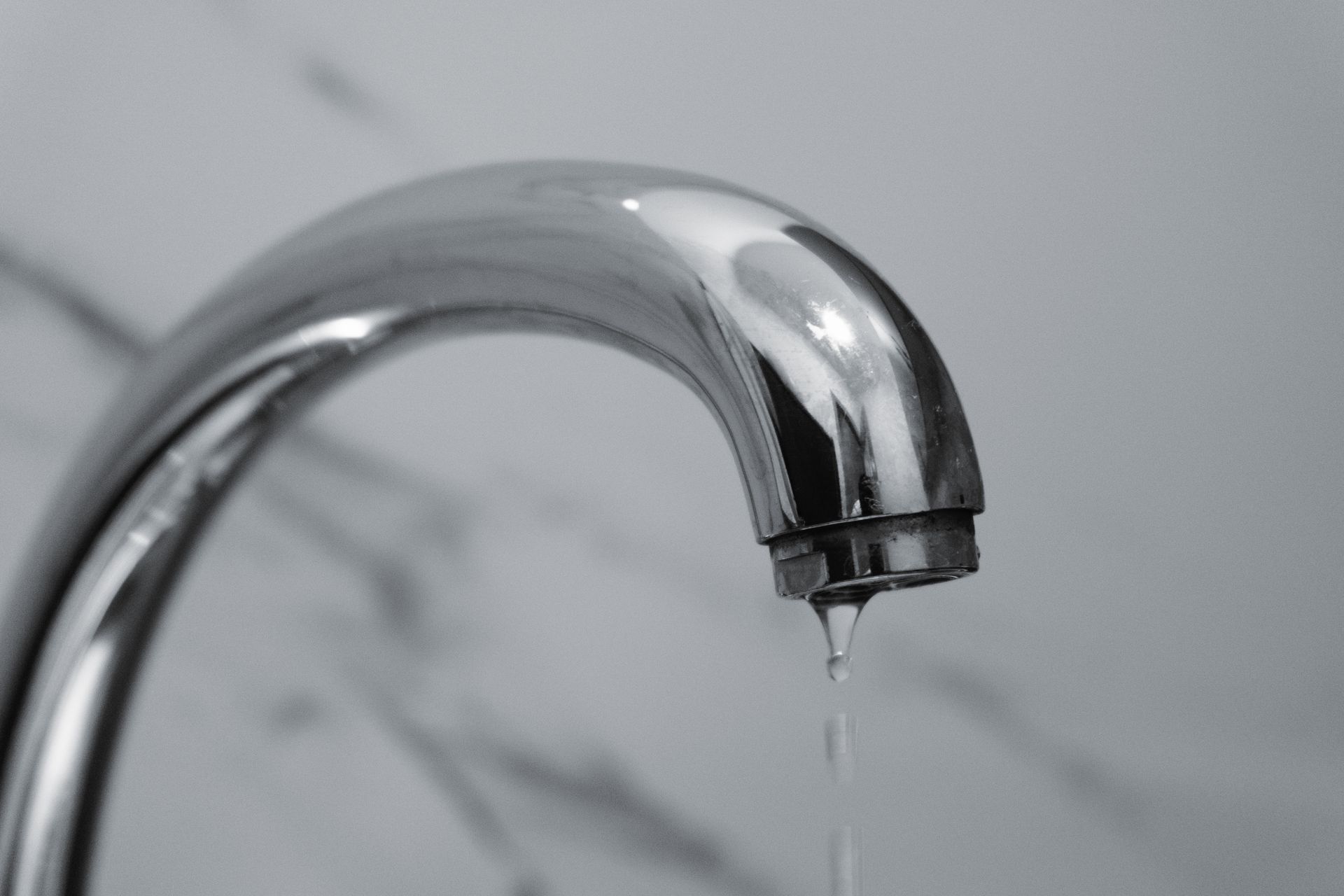
Scottsdale’s own water department measures hardness at 16 to 25 grains per gallon depending on which part of the city you’re in, and most of Arizona isn’t far behind.
Water is generally classified as hard once it crosses about 10.5 grains per gallon, so homes across Phoenix, Tucson, Mesa, and the rest of the state are dealing with water well above that line, every single day.
That’s why Arizona hard water stains show up on glass, faucets, and dishes faster than almost anywhere else in the country, and why the same spots keep coming back no matter how often you wipe them down.
Here’s why Arizona water is this hard, which cities have it worst, where hard water stains show up first, and how to remove them and slow them down.
Want it handled for you?
Why Arizona Water Leaves Behind So Much Buildup
Hard water simply means water carrying a high load of dissolved calcium and magnesium, picked up as it travels through mineral-rich soil and rock on its way to the tap.
Arizona’s desert geology loads water with these minerals before it ever reaches a home, and the state’s heat and low humidity make the problem worse.
Water evaporates fast here, and every time it does, the minerals it was carrying get left behind on whatever surface it was sitting on.
The faster the evaporation, the more concentrated the residue, which is exactly why Arizona homes build up spots, film, and crust faster than homes in wetter, softer-water regions.
How Hard Is Your Water? By Arizona City
Hardness varies by city and even by neighborhood, since it depends on the specific water source and treatment process.
Here’s how it breaks down across some of the areas AZ House Cleaner serves:
| City | Hardness (grains per gallon) |
|---|---|
| Scottsdale | 16 to 25, depending on area (source: Scottsdale Water’s own hardness fact sheet) |
| Goodyear | 10 to 38 |
| Mesa | 12 to 22 |
| Tempe | 8 to 23 |
| Yuma | 10 to 22 |
| Phoenix | 12 to 17 |
| Chandler | 5 to 20 |
| Gilbert | around 13 average |
| Tucson | around 12 to 13 |
Almost every one of these ranges sits at or above the 10.5 grains per gallon line where water is considered hard, and several regularly cross into what’s classified as very hard.
If your city isn’t listed here, assume you’re dealing with hard water too.
It’s the norm across the state, not the exception.
Where Hard Water Shows Up First in Your Home
Once you know the pattern, it’s easier to catch buildup early instead of scrubbing through months of layered scale.
- Glass shower doors. Every shower leaves a film that dries before it’s wiped away, and over time that film etches into a hazy layer.
- Faucets and showerheads. Chalky white scale collects around bases and handles, and clogs showerhead nozzles until the spray weakens or goes sideways.
- Sinks and glassware. Kitchen sinks develop spotting, and dishes come out of the dishwasher looking foggy instead of clear.
- Toilets. Ring-shaped stains form right at the waterline.
- Tile grout. Minerals settle into porous grout and slowly discolor it.
- Evaporative coolers. Swamp coolers, still common in older Arizona homes, run huge volumes of water through their pads and pumps, and scale buildup inside them is one of the most common reasons they lose cooling power.
How to Remove Hard Water Stains
Mineral deposits respond well to mild acids, which dissolve calcium and magnesium without scratching the surface underneath.
Glass and fixtures: soak a cloth or paper towel in undiluted white vinegar, press it against the stained surface, and leave it for 15 to 30 minutes before wiping clean.
For showerheads, fill a bag with vinegar, tie it around the head so the nozzles sit submerged, and let it work before rinsing.
Heavier buildup: a paste of baking soda and a little water adds mild scrubbing power without scratching glass or chrome.
Apply the paste, spray with vinegar, and agitate gently with a non-scratch pad.
What to avoid: abrasive pads, metal scrapers, and harsh powders leave micro-scratches that trap future deposits and make the problem worse.
And skip vinegar entirely on natural stone like travertine or marble, both common in Arizona homes; the acid etches stone.
Use a cleaner made for that material instead.
How to Slow Hard Water Stains From Coming Back
| Habit or Upgrade | What It Does |
|---|---|
| Squeegee shower glass after each use | Removes water before it evaporates and leaves minerals behind |
| Dry faucets and the kitchen sink after heavy use | Same principle, applied to fixtures |
| Whole-home water softener or conditioner | Reduces the mineral load before it reaches your taps at all |
| Protective glass coating | Makes water bead and sheet off instead of clinging to the surface |
None of these eliminate cleaning entirely, but they stretch the time between deep scrubs considerably.
When It’s Time to Call in a Professional
Surfaces with months or years of layered mineral scale usually need more than a weekend of scrubbing to reset.
AZ House Cleaner’s deep clean is $130 on top of the standard clean price.
For example, 3 bedrooms and 2 full bathrooms with the deep clean:
$100 + (3 × $30) + (2 × $50) + $130 = $420
It adds mopped and wet-wiped baseboards and door frames, window tracks, cleaning under and behind furniture, and the fronts, backs and sides of furniture.
Ask for non-toxic products when you book if you’d rather skip harsh chemicals.
See current rates on the pricing page, or check what’s included in a deep cleaning visit.
FAQ: Arizona Hard Water Stains
Why do hard water stains come back so fast in Arizona?
Arizona’s water carries an unusually high mineral load, and the state’s dry heat makes water evaporate quickly, leaving those minerals behind almost immediately.
A perfectly clean surface can start filming again within days.
Is vinegar safe on all my surfaces?
It’s effective on glass, chrome, ceramic, and stainless steel, but never on natural stone like marble, granite, or travertine, where the acid etches and dulls the finish.
Use a stone-safe cleaner instead.
Can hard water damage fixtures or appliances?
Left long enough, mineral deposits can etch glass and corrode fixture finishes, and scale buildup reduces the efficiency of water heaters, dishwashers, and evaporative coolers.
Catching it early is easier than reversing years of buildup.
Will a water softener completely stop hard water stains?
It greatly reduces the mineral content causing buildup, so you’ll see far fewer spots and scrub less often.
It won’t eliminate cleaning, but it makes the job much easier and slower to return.
Should I hire a professional for heavy mineral buildup?
A recurring cleaning schedule keeps new spots from building up.
For deposits that have layered up over months or years, call or text (928) 928-6243 before you book so we can tell you what to expect.
Keep the Buildup Off Your Plate
Hard water is a permanent fact of life in Arizona, but a fresh reset doesn’t have to be.
Book a deep clean through AZ House Cleaner’s booking page, or call or text (928) 928-6243.



Arizona Cleaning
We will send you info about our cleaning company